AI Security
Security Risks of Internally Built and AI-Written Applications And How To Address Them
AI copilots and internally built applications are creating untracked software inside enterprises. Learn how Spektion exposes hidden risks at runtime.

AI copilots and internally built applications are creating untracked software inside enterprises. Learn how Spektion exposes hidden risks at runtime.
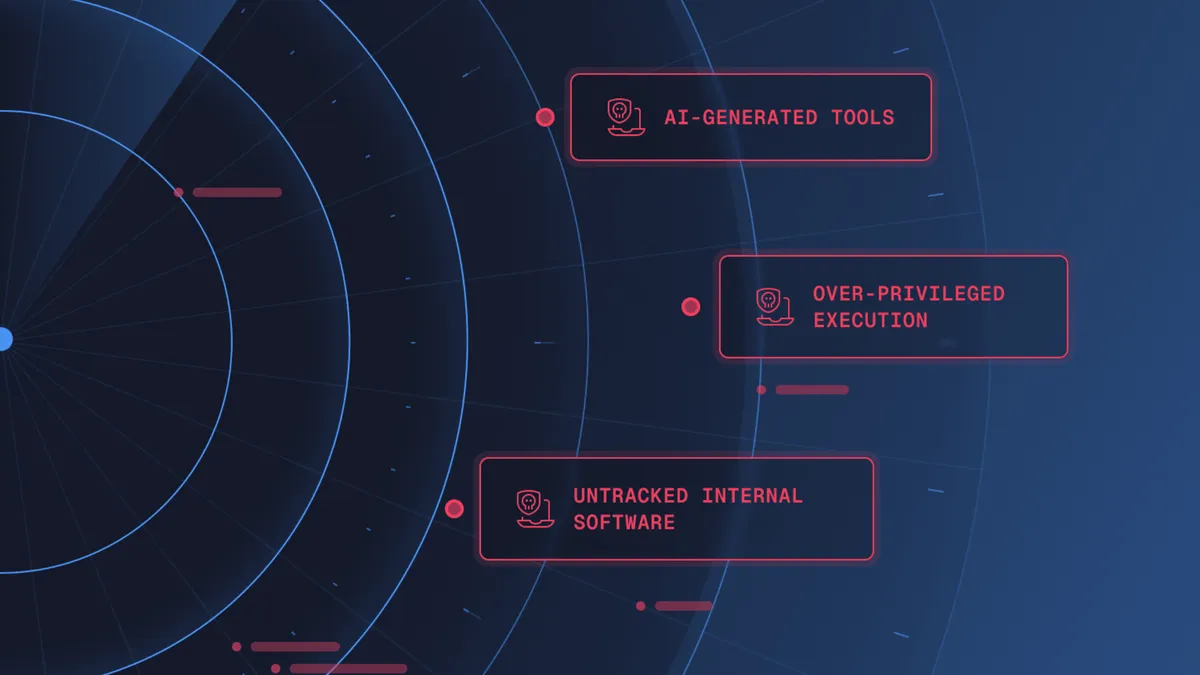
AI copilots and low-code/no-code tools are fueling a new wave of internally built applications. Anyone in the business, not only developers, can build and deploy software to solve problems and move faster.
The risk isn’t just in the cloud; it’s on workstations and servers in your network. Employees are generating code that runs inside your environment without AppSec, including executables, scripts, and automations.
At Spektion, we see this trend across customer environments: internally built software ranks among the top five types of installed applications on all endpoints, and its footprint continues to grow.
AI-generated, locally installed tools are invisible to scanners, absent from CVE databases, and rarely reviewed before execution. That creates a dangerous visibility gap.
Gartner forecasts that by 2026, developers outside of IT departments will make up at least 80% of low-code platform users (up from 60% in 2021). This surge in development means software creation is accelerating, likely beyond traditional security oversight.
From our work helping enterprises identify and assess all installed software at runtime—commercial, internal, or AI-generated—one pattern is clear: the rise of AI-written applications is creating a new frontier in vulnerability management.
Here’s why:
Don’t wait for an attacker or audit to reveal what’s already running in your environment. Learn how Spektion brings hidden risks into view.
This article draws on Spektion’s customer experiences to provide a brief overview of how to recognize and address the emerging challenges of internally built applications and resources.
When organizations first run Spektion, they’re often surprised by what its real-time software inventory reveals. Our platform surfaces everything that’s executing on endpoints and servers, and almost always, that list includes internally built tools the organization didn’t know existed.
However, once visible, many of these applications show critical vulnerabilities: exploitable memory mismanagement, overprivileged execution, and injectable conditions that attackers can weaponize.
These findings align with OWASP’s Citizen Development Top 10, which identifies injection flaws, insecure data handling, and excessive privilege misuse as critical risks in these tools. Given that AI copilots are driving faster, more frequent code creation, it is reasonable to expect that these same vulnerabilities will appear more often in enterprise environments.
One recent study found AI-generated code introduced vulnerabilities in 45% of test cases, with insecure implementations chosen almost half the time, and 30% of developers say they don’t fully trust AI-written output.
AI isn’t eliminating insecure code; it’s creating more of it faster.
Traditional vulnerability management relies on two pillars: published CVE identifiers and scheduled scans. Both fail for internally built and AI-written applications:
That means vulnerabilities in internally built applications are often discovered first by attackers or (if you’re lucky) by red teams simulating them.
The way to address internally built applications is to move vulnerability detection and risk scoring into runtime.
Spektion continuously analyzes how software behaves during operation, detecting new scripts and executables in real-time, regardless of who wrote them and whether they’re on your asset register or have a CVE.
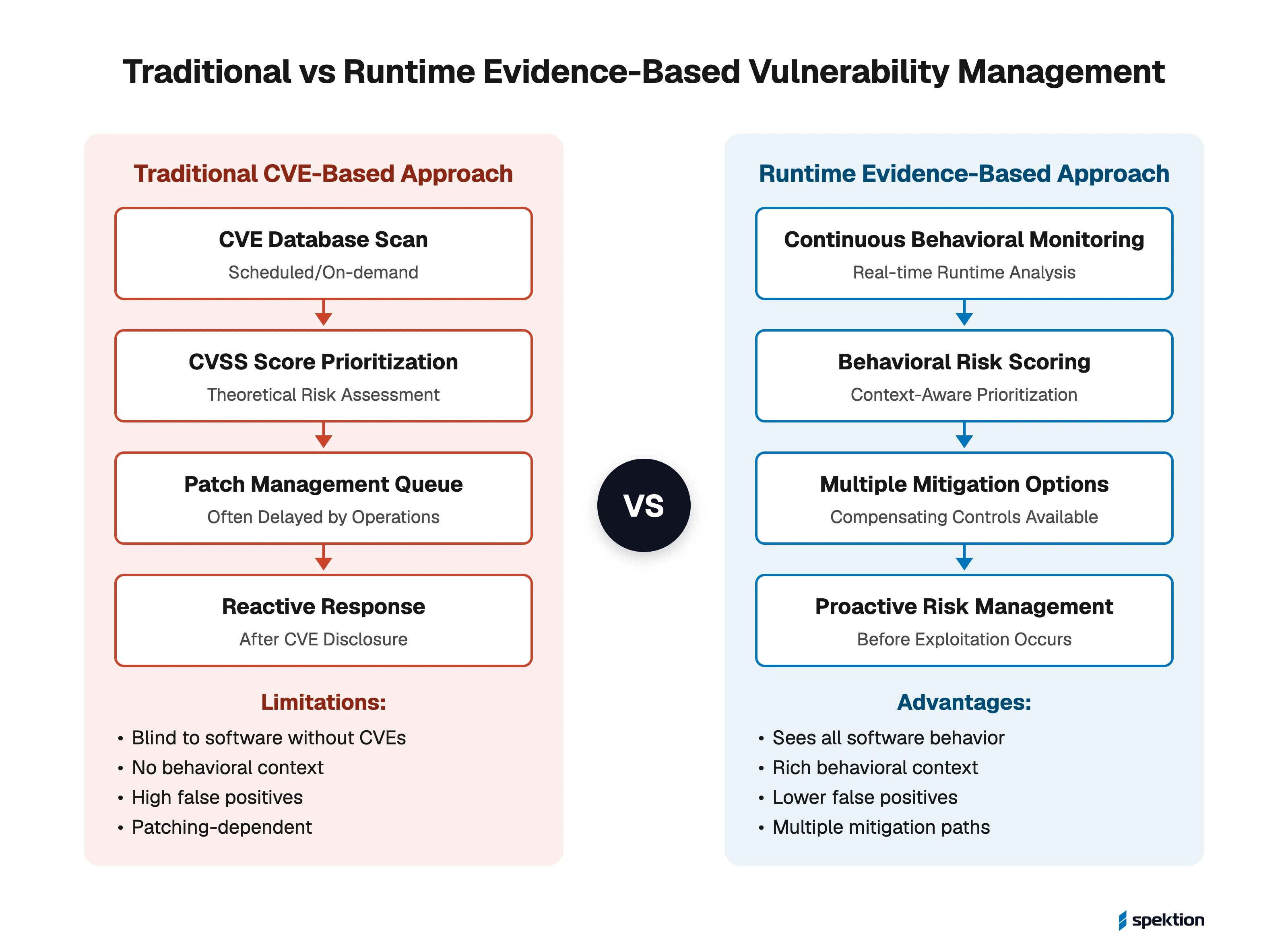
Learn more about runtime evidence in vulnerability management
Spektion customers use runtime evidence to:
With runtime visibility, security teams gain a live, defensible picture of what’s really installed and risky and the leverage to act before attackers do.
Internally built applications are here to stay. Today, 81% of companies view low‑code as strategically important, and 31% have made it central to their software strategy.
In many organizations, leadership is pushing to democratize development and expand API access to accelerate innovation. You don’t have to stand in the way of this trend to respond safely.
Real-time, behavior-based governance enables IT and security teams to identify precisely where risks are emerging in their environment and respond with defensible evidence.
Spektion helps you discover and manage the dozens to thousands of internally developed assets installed in your environment with real-time runtime insights so that you can have consistent visibility and controls across your entire attack surface.
Many exploitable vulnerabilities never get a CVE. Book a runtime assessment and Spektion will show what's actually exploitable across your endpoints.