Detect and protect AI workloads running across your endpoints
Developers, teams, and entire organizations are deploying AI workloads faster than security teams can see them. Spektion provides continuous runtime visibility into every AI agent, coding assistant, inference server, and AI-generated executable operating across your environment.

Endpoints running unsanctioned AI workloads
Observed in early Spektion deployments.
More AI workloads than security teams expect
Runtime discovery baseline across early deployments.
Into AI agents, MCP servers, or AI-generated executables in your current stack
VM tools, scanners, and EDR cannot detect these workloads.
Of AI runtime behavior is detected by traditional tools
No traditional tool observes what AI workloads are actually doing on endpoints.
AI workloads are expanding your attack surface
Employees are deploying AI across endpoints. These workloads behave like any other software process, executing code, accessing credentials, making network requests, and running with elevated privileges.
But most security tools were never designed to understand them.
None of your existing tools can see this risk
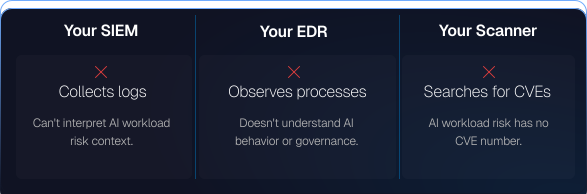
Where AI introduces real exposure
These risks exist whether a policy allows them or not.
You can't govern what you can't see.


1. Coding assistants accessing proprietary source code
2. Inference servers exposed to the network
3. MCP servers storing credentials in plaintext
4. AI agents executing commands with elevated privileges
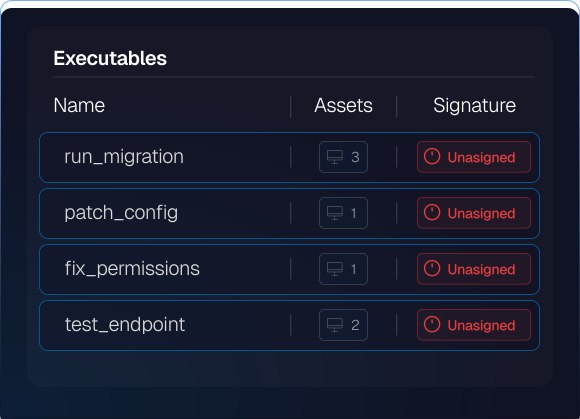
5. AI-generated executables with no provenance or review
You can't govern what you can't see
Without Spektion
With Spektion
What runtime reveals about AI risk
Five capabilities delivered by the same lightweight sensor. No additional deployment required.
Inventory every AI workload at runtime
Spektion continuously discovers and classifies every AI workload, agent, inference server, and model runtime across workstations, servers, and containers, giving security teams a live, always-current view of what's actually running.
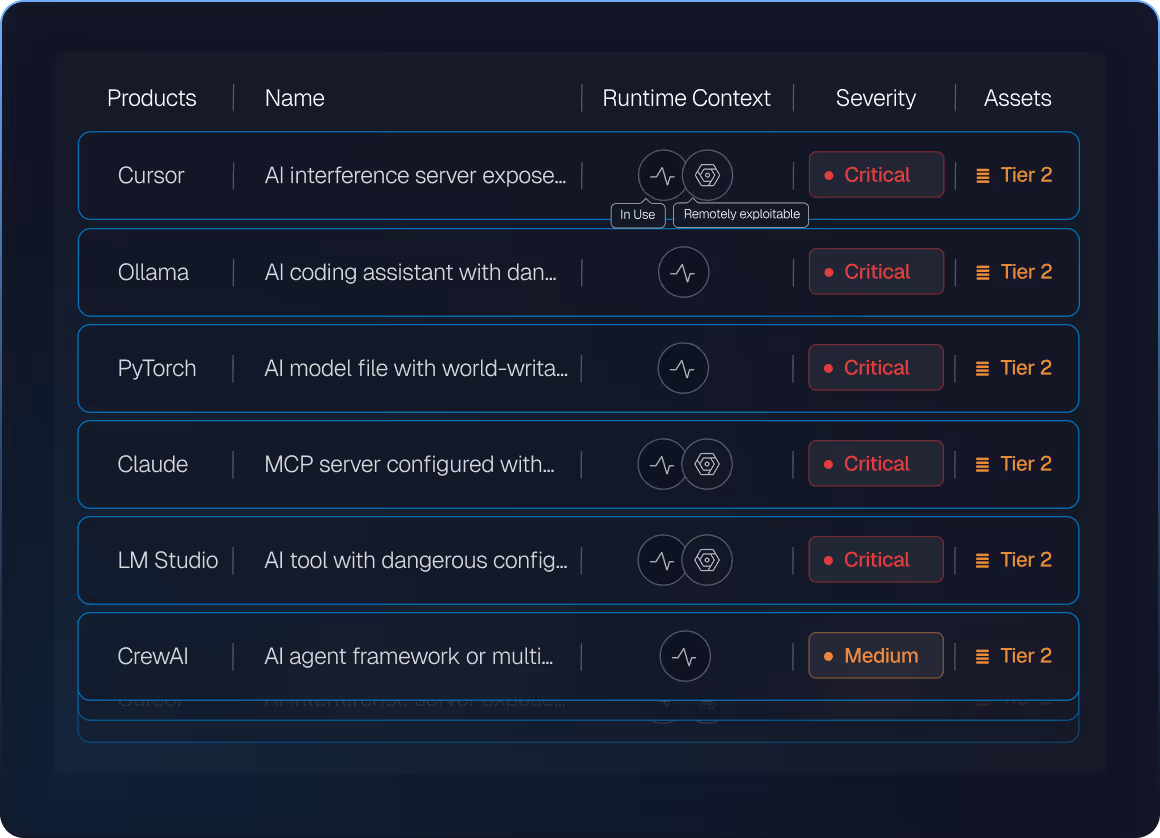
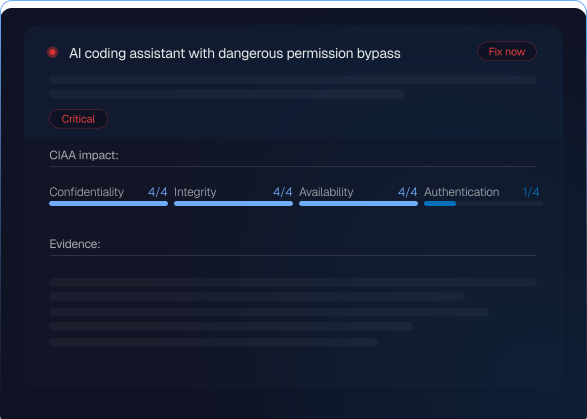
Govern coding assistants and shadow AI
Spektion identifies unauthorized coding assistants—Cursor, Copilot, Claude Code—accessing source code repositories and executing commands, distinguishing sanctioned tools from shadow ones against organizational policy.
Claude is the worked example: what Claude Desktop, Cowork, and Claude in Chrome install and run on a Windows endpoint cannot be tracked by CPE or version, only by watching it at runtime.
Expose credential leakage in AI configurations
Spektion detects plaintext API keys and tokens embedded in AI and MCP server configuration files before they become a breach, and tracks them through to remediation.
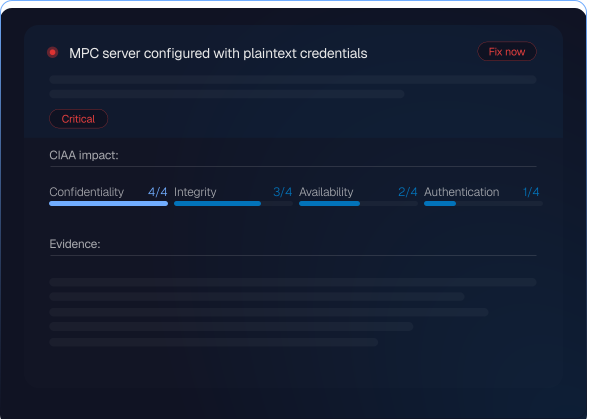
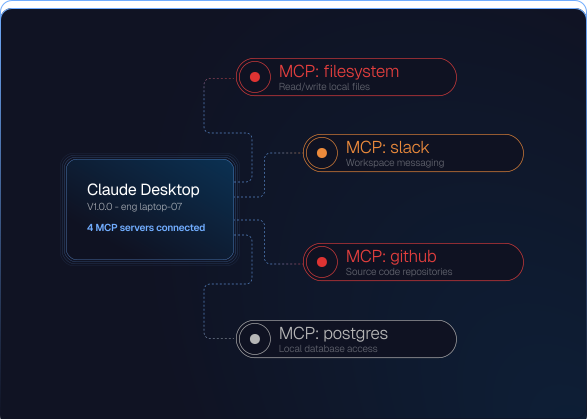
Map and secure MCP servers and autonomous agents
Spektion discovers every Model Context Protocol server exposing tools, data, and credentials to AI agents, and inventories multi-agent frameworks executing code and making network requests without human oversight.
Assess exploitability across privilege, exposure, and AI-generated code
Spektion analyzes execution context to flag AI workloads running with excessive privileges, inference servers exposed on open network interfaces, and AI-generated executables with no CVE or signature—scoring risk based on real runtime state.
"We discovered coding assistants running on dozens of machines we didn't know about. Spektion’s runtime telemetry found them in real time—including several with plaintext API keys.
From shadow AI to continuous observability & governance
Four steps. One sensor. No reboot required.
Step 1
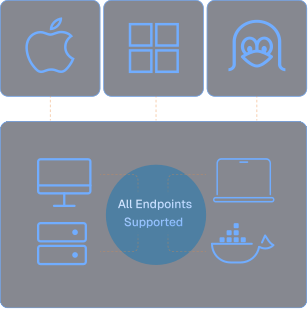
Install the lightweight sensor across endpoints and servers. Deployment takes under five minutes per endpoint. No reboot required. Supports Intune, SCCM, Ansible, JAMF, Tanium, and CrowdStrike RTR.
Step 2
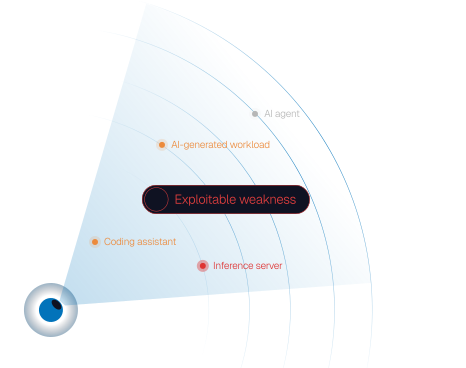
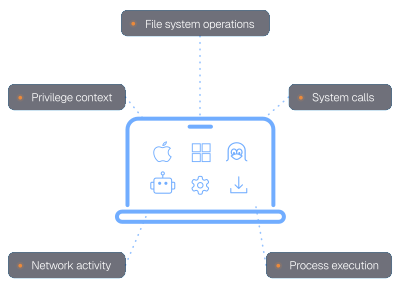
Spektion identifies every AI agent, inference server, and coding assistant operating across the environment — including tools you didn't know were installed.
Step 3
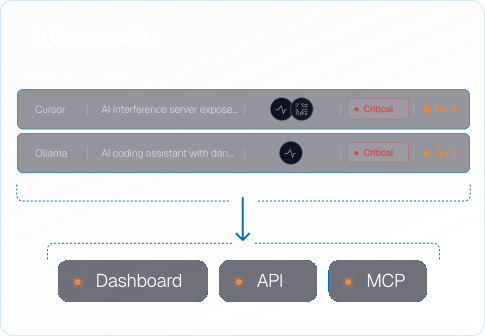
Runtime analysis detects credential exposure, privilege misuse, exposed inference servers, and unauthorized AI workloads, scored by actual risk, not guesswork.
Step 4
Security teams receive risk-scored findings and specific recommended remediation actions to satisfy your organizational AI security baseline.
Frequently asked questions about AI exposure.
If you're in a bake-off or building the business case, these are the answers you'll need.
Scanners match installed software against the CVE catalog, and EDR watches for malicious behavior. An AI workload is a legitimate process with no CVE and no signature, so it creates risk through what it does at runtime: the credentials it reads, the privileges it runs with, and the connections it opens. Spektion observes that execution directly on the endpoint, so AI workloads enter the same exposure model as every CVE, with runtime evidence attached.
Through observed execution on the asset. No enrollment, no integration, and no cooperation from the agent. Enforcement at a control plane only covers agents that were connected to it first, which is what procurement approved. It does not cover the CLI agent a developer installed last Tuesday, the MCP server running on a laptop, or the executable an agent wrote and ran an hour ago. Spektion sees each of them on first execution, the same as any other software on the endpoint, so discovery never depends on enrollment.
Spektion records each session as behavior: files read and written, shells spawned, connections opened, novel domains, MCP servers used, and configuration changes. It detects insecure agent behavior such as credential access, novel destinations, privileged execution, and boundary violations, each severity-scored with command-line evidence and a recommended action, and each attributed to a named OS identity and asset so response is scoped to what was actually touched.
No. Gateways and AIDR platforms inspect and control the content of AI interactions through collectors placed in the interaction path, and they can block an injection before it reaches the model. Spektion detects at the layer they do not see: the endpoint OS runtime, where the AI workload executes. The layers complement each other. Spektion surfaces the full AI estate so you know what the interaction layer should cover, and when an AIDR detection fires, Spektion supplies the execution record: who ran the agent, on which asset, and what it did on the host.
Spektion sees them as soon as they execute, even if only one user ran one on a single asset, and observes their runtime behavior the same way it observes any other software: privilege, network exposure, what the executable can reach, and any credentials it touches. Findings are reported with runtime evidence in near real time, whether or not a CVE will ever exist for the code.