Detect exploitable exposure. Even when a CVE will never exist.
Most vulnerability programs rely on CVEs to detect risk. But many exploitable conditions never receive one. Spektion analyzes runtime activity to reveal exploitability that traditional scanners cannot detect, so you know the exposure of everything running in your environment, not just what has CVEs.

Applications with exploitable flaws that had no CVE
Spektion runtime research across widely deployed software.
Source: Spektion Research
Recent supply-chain attack campaigns with no CVE
Industry incident analysis across recent documented campaigns.
Source: Industry incident analysis
In AI-generated workloads on endpoints
High-risk runtime behavior identified — high privilege, executable memory, listening on open port.
Source: Spektion runtime research
CVE-based security only covers part of your attack surface.
Vulnerability scanners detect disclosed flaws. But attackers exploit conditions that often exist before disclosure—or never receive disclosure at all.
Most vulnerability programs rely on CVEs as their primary signal of risk. But a vulnerability only receives a CVE after a full chain of events that can stall at any step:
1. Discovery
2. Documentation
3. Disclosure
4. CVE assignment
Everything outside that pipeline remains invisible.
The hidden half of the attack surface
The risks that never appear in vulnerability databases include:

Undisclosed vulnerabilities in software
Risky runtime patterns that map to known attack techniques but carry no CVE.
Supply-chain components and extensions
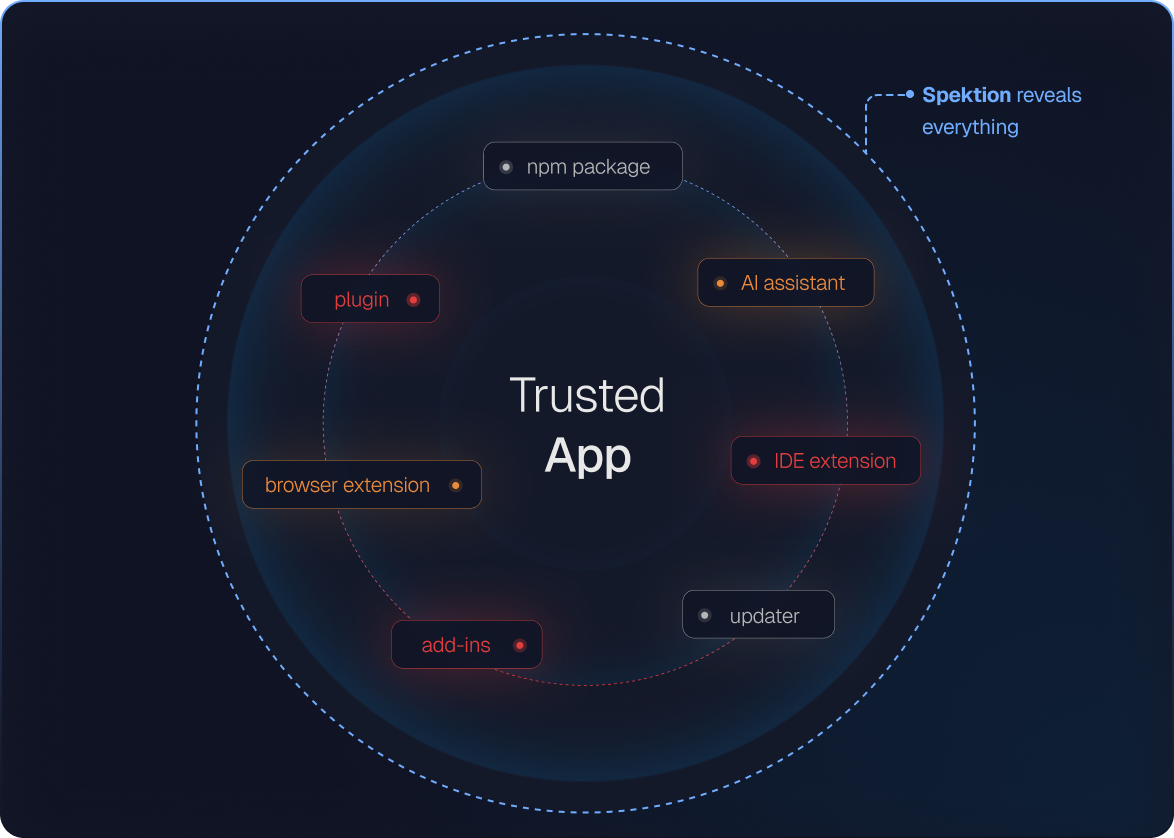
Browser plugins, IDE extensions, SaaS add-ins. No disclosure process. Real attack surface.
Software that changes behavior after deployment
Clean on install, weaponized weeks later via silent update. No CVE. Ever.
AI-generated apps and internal tools
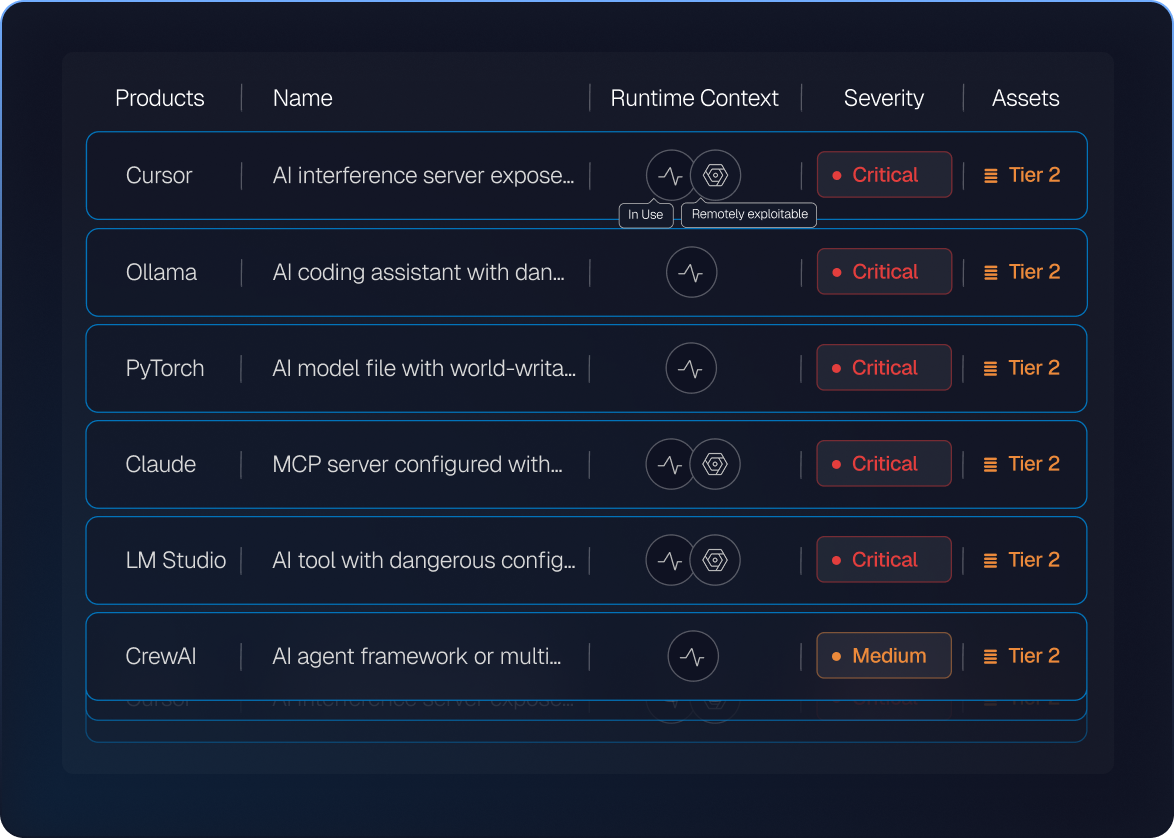
Coding agents used outside an SDLC are producing apps used on workstations and servers outside any approval workflow. No vendor. No disclosure pipeline. No potential for CVE detection.
What runtime evidence reveals that scanners miss.
Four capabilities built on the same runtime data plane, one lightweight sensor, continuously observing every endpoint.
Detect exploitable behavior in running software
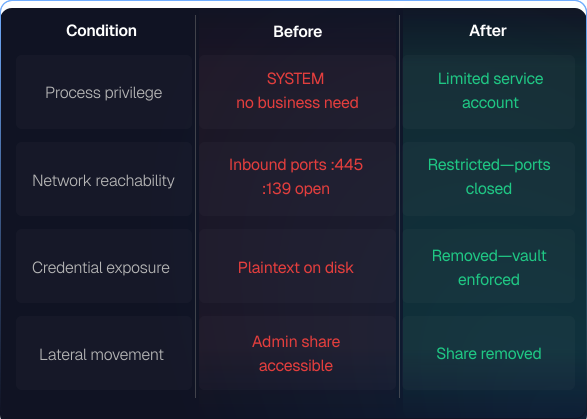
Spektion observes what software actually does at runtime—system calls, memory activity, privilege usage, file access, and network connections. Risky patterns are mapped to MITRE ATT&CK techniques and CWE weaknesses, even when no CVE exists. Security teams can detect dangerous functionality the moment it appears.
Unquoted executable paths are the textbook case. Spektion Research found one in MobaXterm's file-editor launch at runtime and disclosed it through VulnCheck as CVE-2026-25866, a local privilege escalation in MobaXterm.
Identify hidden software dependencies
Extensions, plugins, packages, and add-ins execute inside trusted applications across modern environments. Most have no vulnerability disclosure process. Spektion inventories everything executing on your endpoints and analyzes runtime behavior—permission scope, network connections, system call patterns, and privilege context.
Detect when software behavior changes
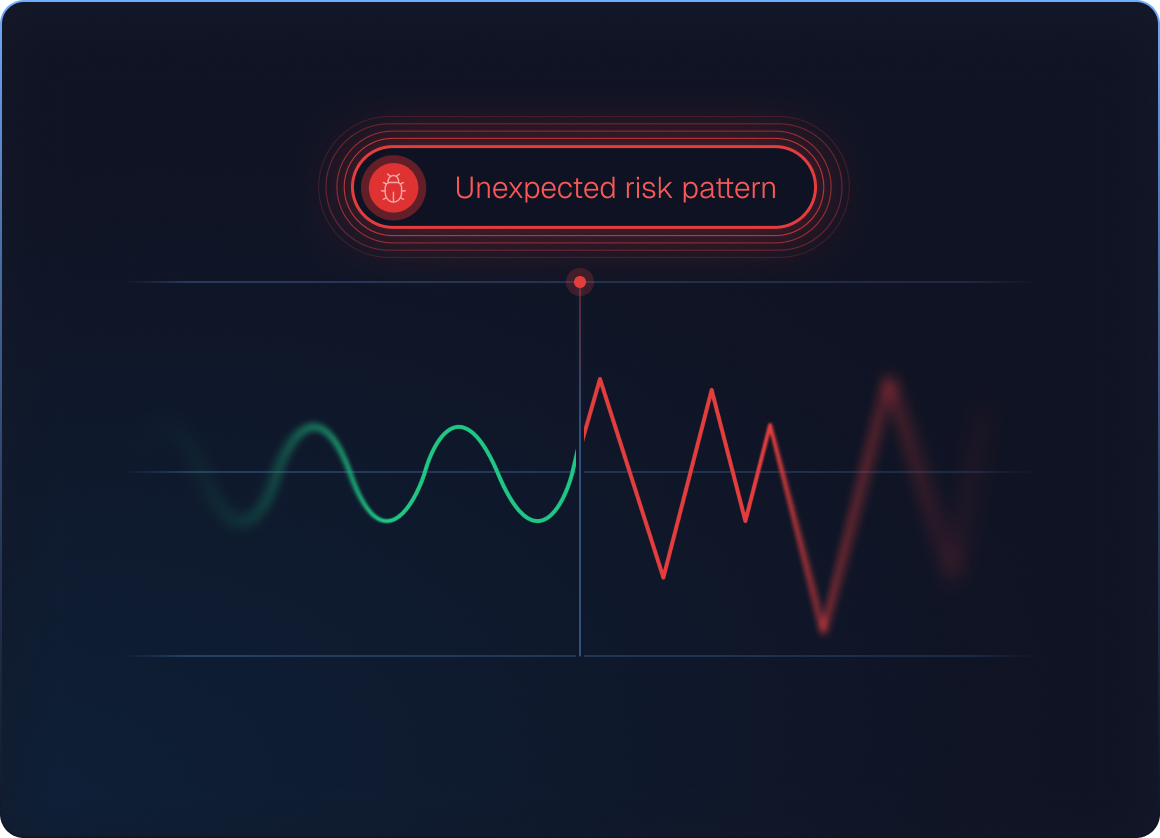
Software often changes behavior weeks or months after deployment through updates, configuration changes, or dependency modifications. Spektion continuously monitors behavioral baselines and alerts when applications begin performing risky or unexpected actions—whether or not a CVE is ever published.
Detect risk in AI-generated and custom internal software
Coding agents and employees are building internal applications with no application security or gating. The Spektion sensor identifies them and observes runtime behavior. Workloads moving from enterprise software back to the endpoint introduce insecure conditions like insecure memory management and overly permissive access to SSH keys.
"Spektion gives us runtime visibility into what's actually exploitable across our environment beyond just what a scanner would flag. That precision is what allows our team to execute with confidence and prioritize what matters. For a team managing risk at our scale, that's a foundational capability requirement.
From sensor to reduced exposure in four steps.
One lightweight sensor. Continuous observation. No scanning windows, no rules to write before you see results.
Step 1
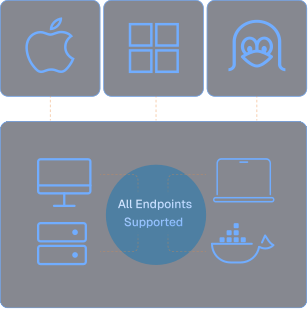
Install the Spektion lightweight sensor across endpoints and servers via Intune, SCCM, JAMF, Ansible, Tanium, or CrowdStrike RTR. No reboot required. First runtime data within minutes.
Step 2
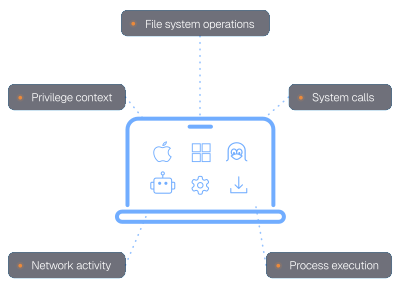
Spektion continuously analyzes system calls, privilege use, memory operations, file access, and network connections — a live behavioral feed, not a scheduled scan.
Step 3
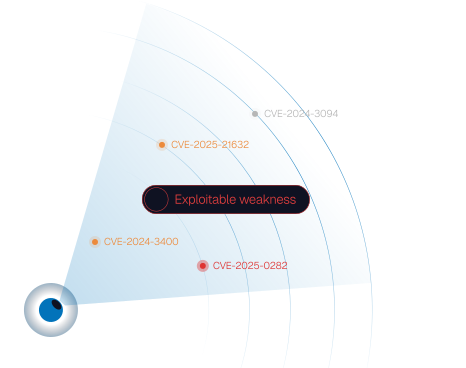
Behavioral patterns are correlated with MITRE ATT&CK techniques and CWE classifications to identify exploitability signals — with or without a CVE to match against. Every finding carries a full evidence log.
Step 4
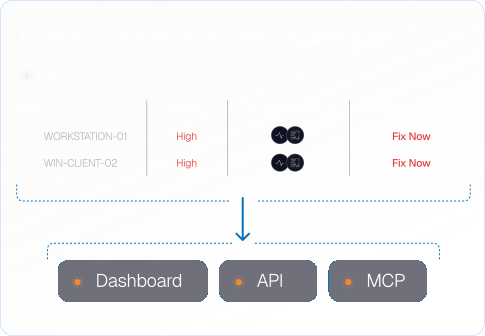
Security teams receive risk grades and actionable recommendations to reduce exposure through remediation, configuration changes, or compensating controls. Feed results to your SIEM, SOAR, or ticketing via API or MCP.
Frequently asked questions about runtime risk beyond CVEs.
If you're in a bake-off or building the business case, these are the answers you'll need.
Vulnerability scanners detect known CVEs. They cannot detect risky runtime behavior or exploitable conditions that have not been disclosed. Many exploitable conditions never receive a CVE, because they arise from undisclosed vulnerabilities, supply-chain components, or software that changes after deployment. Any tool that starts with CVE data as its input inherits this structural limitation.
Explore third-party software risk →Yes. Many exploitable risks arise from dangerous runtime behavior rather than documented vulnerabilities. Spektion research found that 71% of applications with known exploitable flaws had no CVE assigned. A PDF editor with zero CVEs was observed capturing keystrokes, allocating executable memory with elevated privileges, and creating a remotely accessible named pipe—all mapped to MITRE ATT&CK techniques.
By analyzing runtime activity instead of relying solely on vulnerability disclosures. Spektion observes what software does (system calls, memory operations, network connections, privilege use, file access) and identifies behavioral patterns that indicate exploitability. Spektion identifies exploitable behavior, maps it to CVEs, and integrates with your security.
Spektion analyzes software behavior during execution to detect exploitable conditions that traditional vulnerability tools cannot see. Rather than matching installed software against a CVE database, Spektion observes what software actually does, revealing risky behavior whether or not it has been disclosed, documented, or assigned a CVE ID. It covers both CVE-based risks and the hidden half: the exploitable conditions that will never receive a CVE.
No. Automated pentesting tools run exploits against your environment to test exploitability, with associated production risk and point-in-time results. Spektion observes runtime context continuously—what's executing, with what privileges, exhibiting what behavioral patterns—without running exploits. Coverage is continuous and extends to risks no exploit database enumerates.
Yes. Spektion sees these tools, even if only created and executed by one user on a single asset, as soon as they execute, continuously monitors behavior, and reports on undisclosed vulnerabilities in near real time.