About the podcast — Hosted by former CISO-turned-CEO Joe Silva, this show delivers unfiltered stories, lessons, and laughs from the frontlines of cybersecurity leadership.
Overview
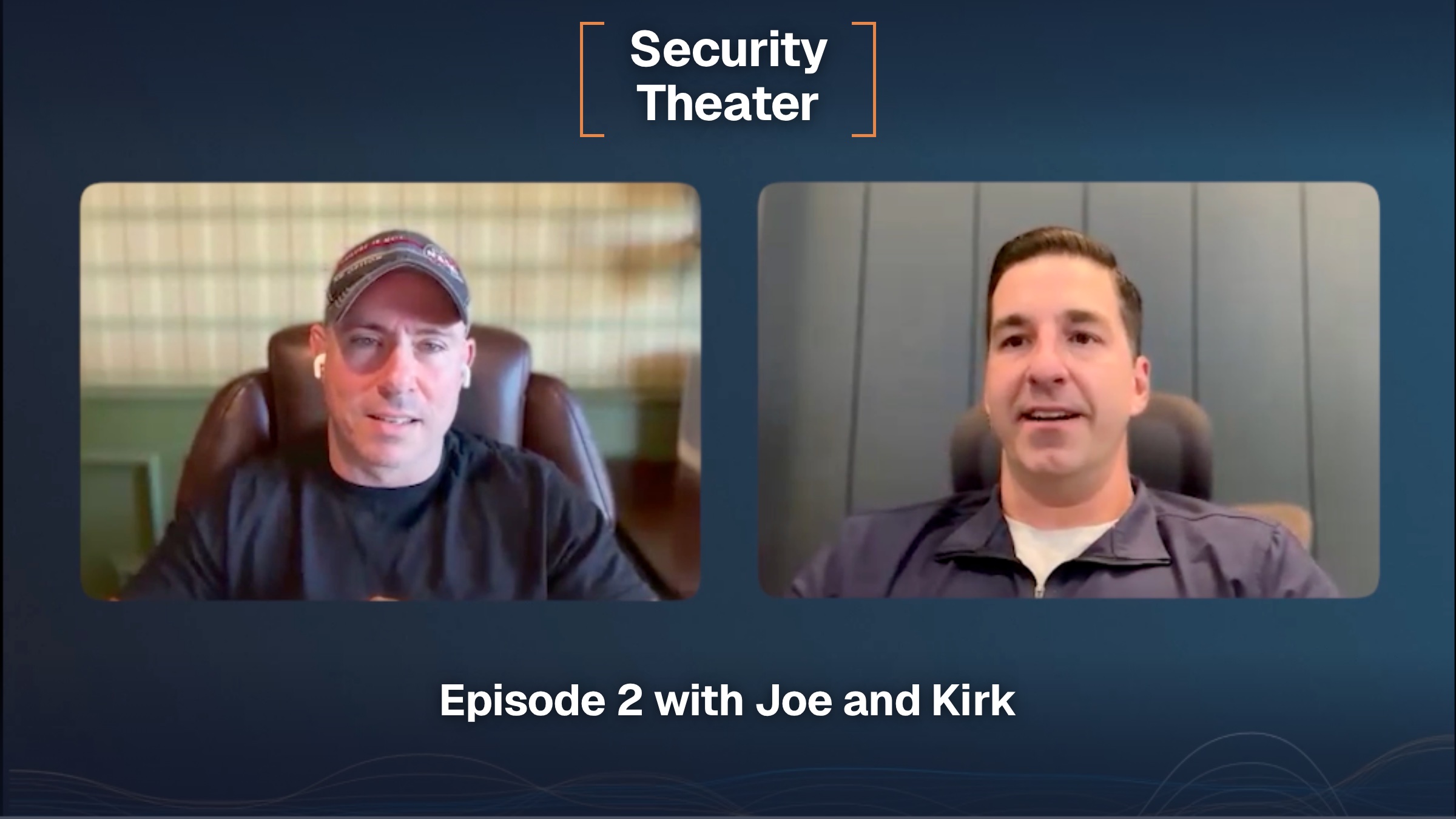
“Vulnerability management is broken” has become a vendor cliché. In this episode of Security Theater, Joe Silva and NIQ’s Kirk Havens take the claim apart and rebuild it. Their starting point: vulnerabilities are a lagging indicator, not the root problem, and the discipline has not kept pace with a roughly sevenfold rise in volume over the past decade while budgets and headcount stayed flat.
The conversation moves through why traditional patch SLAs of 60, 45, 30, and 7 days no longer hold once mean time to exploit has collapsed toward zero, whether “exposure management” is a real evolution or a repackaged prioritization schema, and why the fix runs upstream: tech debt, asset hygiene, and the organizational trust that lets a security team ask why a vulnerability exists instead of just re-ranking it faster.
They close on agentic AI and the warning that rapid, ungoverned adoption is already recreating the same boundary and sprawl problems the industry spent a decade failing to solve, this time across AI agents and the identities they carry.
It is part reframe, part field report, with hard-earned takes on leading remediation teams, translating risk to the business, and what finally forces the model to change.
Key Takeaways
- Vulnerabilities are a lagging indicator. Counting and re-ranking them faster does not fix the tech debt and hygiene gaps underneath.
- Volume has outrun capacity. Roughly seven times more vulnerabilities over the last decade, against patch SLAs built for a slower era.
- Time to exploit has gone negative in some cases. Exploitation can begin before a team has even scanned for the flaw.
- “Exposure management” can sharpen the executive narrative, but is often an automated version of the same prioritization, not a structural fix.
- Leading remediation works better without blame. Anchor on shared goals and ask why a vulnerability exists, not just how fast it can be closed.
- Agentic AI is the next sprawl problem. Ungoverned adoption recreates old boundary and identity gaps at machine speed.
Chapters
- 00:00 — Cold open and introductions: Joe Silva and Kirk Havens
- 01:16 — Is “vulnerability management is broken” actually true?
- 03:11 — Legacy vuln management's overhead and the 7x volume spike
- 06:59 — Exposure management: real evolution or new buzzword?
- 08:57 — Agentic AI, IT hygiene, and going upstream
- 13:10 — Building trust: moving past punitive security culture
- 15:49 — The KRI trap and asking why vulnerabilities exist
- 18:23 — Why vuln management lags behind detection engineering
- 21:53 — “Murphy doesn’t care”: attacker speed vs. defender economics
- 27:16 — Reframing security as operational and financial risk
- 29:02 — Why Joe started Spektion; dropping blame in vuln conversations
- 34:54 — Agentic AI's coming wave of security-boundary sprawl
- 38:09 — The AI governance gap and agent sprawl at scale
- 44:56 — The cloud cost/security parallel and agent identity gaps
- 47:20 — Closing hot takes: what finally forces real change
Guest & host
The guest
Kirk Havens
Head of Security Strategy, NIQ
Kirk Havens is Head of Security Strategy at NIQ (NielsenIQ). With more than a decade in cybersecurity and senior security roles across global enterprise and financial services, he brings a practitioner’s view of where vulnerability management breaks down, why volume has outrun capacity, and what agentic AI will do to the attack surface next.
The host
Joe Silva
Co-founder & CEO, Spektion
Joe Silva is co-founder and CEO of Spektion and host of Security Theater. A former Fortune 200 CISO with a background in security and intelligence, he started Spektion to close the gap between what scanners flag and what is actually exploitable at runtime.